 Lens


It was November when we realized something was off. Not because of an exploit or some dramatic failure but when things looked grea: $4M TVL on Plasma, organic growth, clean metrics. From the outside, everything looked exactly how it was supposed to look.
Internally, it felt different. The dashboards were green but the work felt hollow. TVL was climbing on the back of incentives while our core thesis was quietly falling apart underneath.
Over a few weeks, we went back through everything from old discourse we had, decision logs and half-finished pivots. The problem wasn’t a bad tactic or a missing feature. We had built something clever that the market no longer needed, for a set of conditions that had changed.
This piece is our attempt to lay out what we got wrong and what we still think we got right. Some of it is specific to our team while some of it will feel familiar to anyone building in DeFi. We’re now moving on to our next phase, building IRIS, but it’s worth writing this down while the lessons are still fresh.
246 Club
Before we get started, to leave this as the last record of 246 Club, here’s a short overview of what 246 Club was for anyone who isn’t familiar with the project / if you already know the backstory, you can skip this section.
246 Club was designed as a credit-yield conduit between lending markets and arbitrage strategies.
Supply side: re‑lending
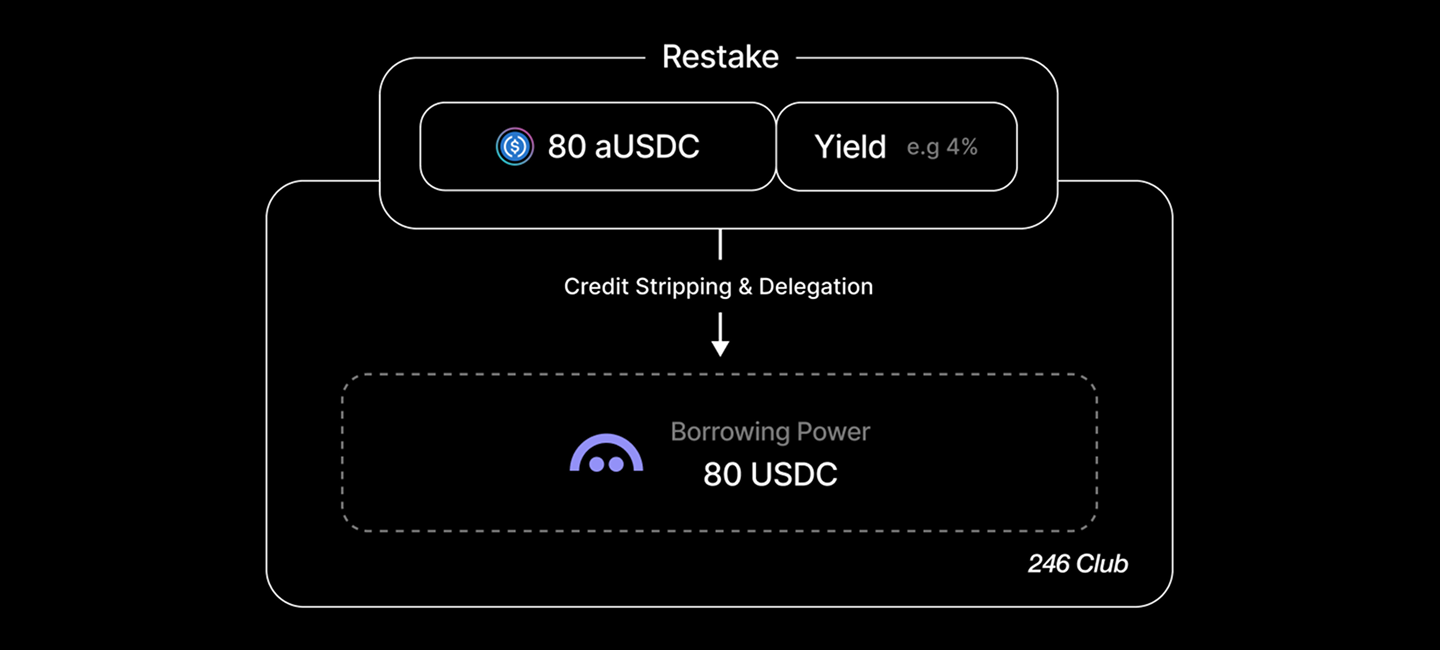
Users deposited assets into Aave, or brought aTokens directly. Those aTokens were then “re-lent” into 246 Club. Depositors kept Aave’s base yield and earned additional yield from cross-protocol arbitrage.
Demand side: Cross‑protocol Arbitrage
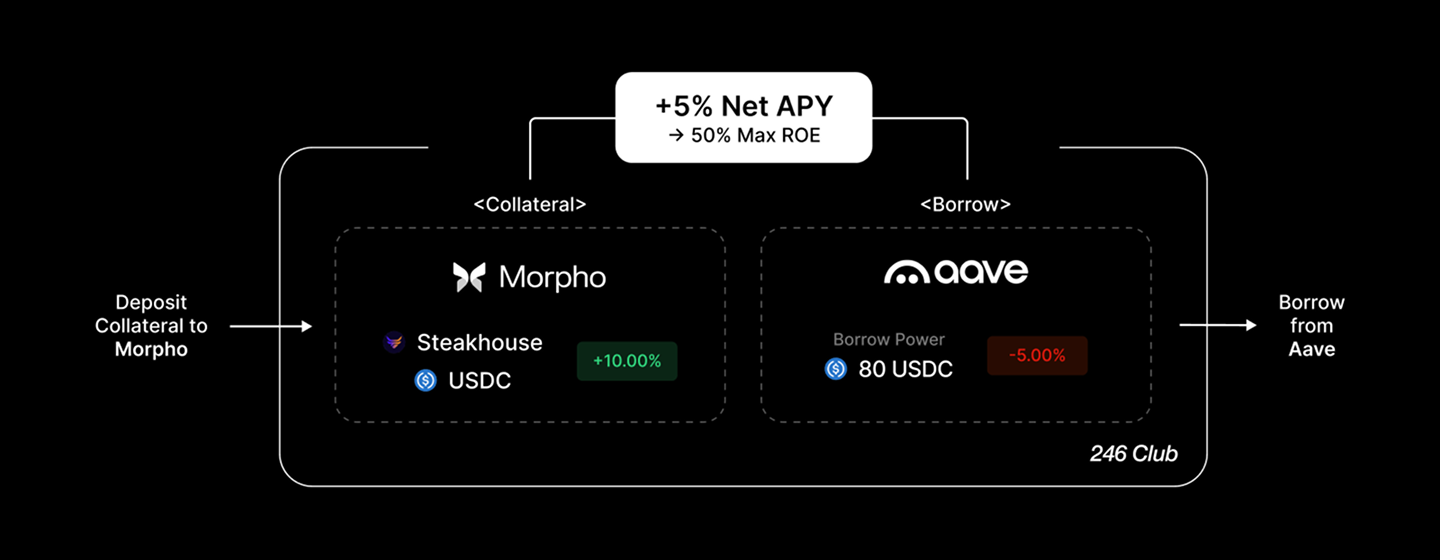
On the other side, arbitrageurs posted collateral into higher-yield venues (for example, a Morpho vault paying around 10%) and borrowed from Aave at a lower rate (say, 5%) via 246 Club. The trade was simple: borrow cheap, earn higher, and keep the spread, often with leverage.
The edge came from how fragmented lending markets are: every new asset and venue creates another siloed market with its own rate, and those dislocations don’t instantly close.
Our Thesis
1. Horizontal growth in DeFi lending
As DeFi grows, new assets and new yield sources tend to show up first in lending markets. Those markets expand horizontally: many isolated pools, each with its own collateral type, risk profile, and rate. That fragmentation means rates don’t move in lockstep. When dozens of asset-specific markets grow in parallel, you get a steady stream of small, persistent arbitrage opportunities between them.
2. Lending as the downstream funnel
We saw lending protocols as the downstream sink for whatever yield the ecosystem invents. Narrative-driven yield comes and goes; lending markets sit underneath and redirect flows as conditions change. In that frame, interest-rate arbitrage isn’t just about sniping mispricings. It’s a way to passively capture new assets and yield streams without hand-managing every individual strategy.
3. Connecting credit and yield
The last piece was scale. Capital should move to better returns the way water runs downhill, but in practice it often gets stuck in silos. Our goal with 246 Club was to push this to the protocol level: connect surplus liquidity on one side to higher-return strategies on the other, and let the spread accrue to both. As markets fragment further, the thinking went, those inefficiencies would grow, and a protocol that sits in the middle could do very well.
Cross-Protocol Aggregation
Aave as our foundation

Aave was the foundation for all of this, and that choice wasn’t random. It offered some of the most attractive risk-adjusted yields in DeFi, with a market size that rivals entire L2 ecosystems and a reputation as the most reliable, scalable source of onchain credit.
We looked at few patterns : Morpho Optimizer capturing a large share of Aave’s TVL with relatively small yield improvements, MEV Boost reaching near-universal validator adoption for a marginal bump in returns, ETH restaking attracting huge inflows for roughly single‑digit incremental yield.
The working conclusion was that if you can enhance an already trusted yield source without changing its core risk profile, you can usually tap into a very large pool of existing liquidity.
Morpho as our horizontal surface

Morpho’s Vault architecture gave us the horizontal surface area we needed. Vaults simplify and bundle lending positions across different risk profiles, so that as new assets come on-chain, they land in new Vaults, and each one can open another pocket of arbitrage. In many cases, borrow rates tend to settle near the yield of the collateral asset (for example, PT-like rates), while early markets in new assets often suffer from supply shortages and therefore elevated lending yields. That structural gap is exactly what we were trying to sit on.
The same pattern was starting to show up elsewhere: Euler v2, Silo v2, Aave v4 and similar designs all point toward more horizontally fragmented lending markets. Our aim wasn’t to become the underlying infrastructure. It was to sitting above, and aggregating these opportunities and capturing value as lending yields scale with each new onchain asset and yield primitive, rather than reinventing the base layer.
Pair specific rates / Buffer allocation / Dual Liquidation Thresolds
For collateral–debt pairs, we avoided treating everything as if it were equal. We had pair specific parameters: correlated assets such as USDC collateral against USDT borrow could support higher LTVs, and interest rates were set at the level of each pairing instead of using one blunt, conservative curve for all. The goal was simple: offer better terms when the actual risk was lower, instead of applying worst‑case assumptions across the board.
On top of that, we had Dual Liquidation Thresholds. Unlike traditional liquidation approaches with a single trigger, we defined two separate Liquidation Thresholds with distinct close factor and liquidation bonus dynamically increasing or decreasing to avoid toxic liquidation spirals.
We also added a buffer allocation system to handle demand spikes. In the “normal” state, a collateral type would borrow at its base rate and stay within a soft cap. If demand for that collateral pushed beyond the cap, it drew against a reserved buffer, triggering higher rates for that specific pair while leaving other pairs largely untouched. Rate pressure stayed where the demand actually was, instead of spilling over into the whole market.
From an engineering perspective, this stack of features showed that we could design and ship fairly intricate credit mechanisms. The uncomfortable part, which we’ll get into later, is how little that sophistication ended up mattering.
Post-Mortem
Directionally Right, Details Wrong

Here's where the thesis met reality.
What We Predicted:
- Stablecoins will multiply, but true net new yield sources will be scarce
- Yield will keep getting diluted
- Cost of capital keeps declining
- A new wave of onchain capital demand will appear, providing new yield forms
- Lending markets will horizontally scale as a result
- Increasing diversity in risk/return profiles will drive fragmented, localized markets
- We'd capture this shifting landscape through aggregation
What Actually Happened:
Points 4 and 6 collapsed. Not in the way we expected.
The market DID diversify with ****LSTs, LRTs, RWA yields, new L2 native yields, points farming, more stablecoins, more venues. On paper, heterogeneity arrived exactly as predicted.
But it wasn't "net new" capital demand or "sustainable new yield forms." It was recycling. The same capital, same strategies, self-looping or repackaged with hidden risk. No fundamentally new economic activity at scale.
Result was yield dilution accelerating without corresponding expansion in viable opportunities. The risk/return landscape stayed surprisingly flat and undifferentiated instead of blooming into the diverse, flourishing credit/yield ecosystem we anticipated.
Looking back at the [ Yield Compression ] article, I think we might have already been at least somewhat aware of this by that point.
Marginal Yield Improvement

For Morpho Optimizer, the playbook was simple: take Aave or Compound, offer a few extra points of yield for roughly the same risk, and you could capture a huge share of TVL.
In 2021–2022, the choice for a user was basically “5% on Aave or 7% on Aave via Morpho,” and the answer was obvious. Morpho earned a big chunk of Aave’s TVL by being the strictly better version of one decision.
By 2024-2025, that decision tree looked nothing like that. A typical user might be looking at 5% on Aave, 7% via something like 246 on top of Aave, 15% in a Morpho vault, 12% on a Pendle position, 20% on a new L2 farm, 8% in some RWA product, and a dozen other options.
In that environment, “+2% on Aave” doesn’t live in a vacuum. It’s competing with completely different risk/return profiles, liquidity constraints, lockups, counterparty risks and narratives. Users aren’t asking how they can slightly improve their Aave yield by a bit anymore. They were asking what the best overall use of their capital is given the risk preference.
We were indexing on old user behaviors (when Morpho's playbook still worked) while building for a market that had already moved on.
Trust Inheritance
Our original story was simple: people already trust Aave, so giving them the same rate plus a bit extra should be low-friction.
In practice, trust did not flow downstream. Users trusted Aave itself, not anyone stacking on top.
- No matter our technical sophistication, we were "one more downstream layer"
- Further from source = higher perceived risk, regardless of actual risk
- Most tellingly: most re-lenders weren't existing Aave users
We expected to convert Aave lenders. Instead, we attracted yield farmers who didn't care about Aave's brand at all. They just saw another yield venue to evaluate against all others.
The "safe Aave rate + marginal boost" positioning failed because:
- In heterogeneous markets, absolute returns matter more than relative improvements
- New protocols don't inherit incumbent trust no matter what they build on
- Users willing to try new protocols are yield farmers comparing ALL options, not Aave loyalists looking for slight improvements
Moving on too fast

On mainnet, we had something real: around $1.5M in organic TVL, roughly $2.5M including borrowing and lending, and it was growing. Instead of treating that as a base to deepen, we kept chasing something bigger or faster. We hopped between markets, launched new chains, and launched side initiatives before we had properly understood the one that was already working.
Every cold restart killed momentum. We never stayed long enough to:
- Solve emerging issues where we had traction
- Build conviction about what was working
- Compound existing user relationships
We treated slow, steady growth as failure instead of foundation.
Not focusing on the core
We agonized over things like renaming “lending restaking” to “re‑lending,” iterating on the landing page, polishing the UI, tuning risk parameters at the margins, and making the docs immaculate.
Meanwhile, we weren’t seriously validating whether the main actors in the system would behave the way we needed them to. We didn’t press on the basic questions:
- Whether re-lenders would actually re-lend
- Whether arbitrageurs would actually arbitrage cross-protocol dislocations
- If the core value proposition was competitive
Everything needed to be perfect in ways that didn't matter, while the fundamental question of does anyone want this? went unvalidated.
Overbuilding the wrong thesis
Underneath everything sat one assumption: Aave lenders, given the chance, would happily opt into a modest, trusted yield boost on top of Aave. That turned out to be wrong. We still built an entire machinery around it.
By the time the thesis had clearly failed, we were sitting on a stack of features which wasn’t solving for a user behavior that never showed up. The order of operations should have been the opposite: first confirm that re‑lenders actually re‑lend and arbitrageurs actually arbitrage in our setup. If both are true, then start refining parameters.
If either is false, keep the system simple and attack the base loop instead of layering in complexity.
We did it backwards. We poured effort into edge cases and safety rails for a system whose primary use case was still unproven. The result was a sophisticated implementation wrapped around a weak, unvalidated core.
Distribution that matters
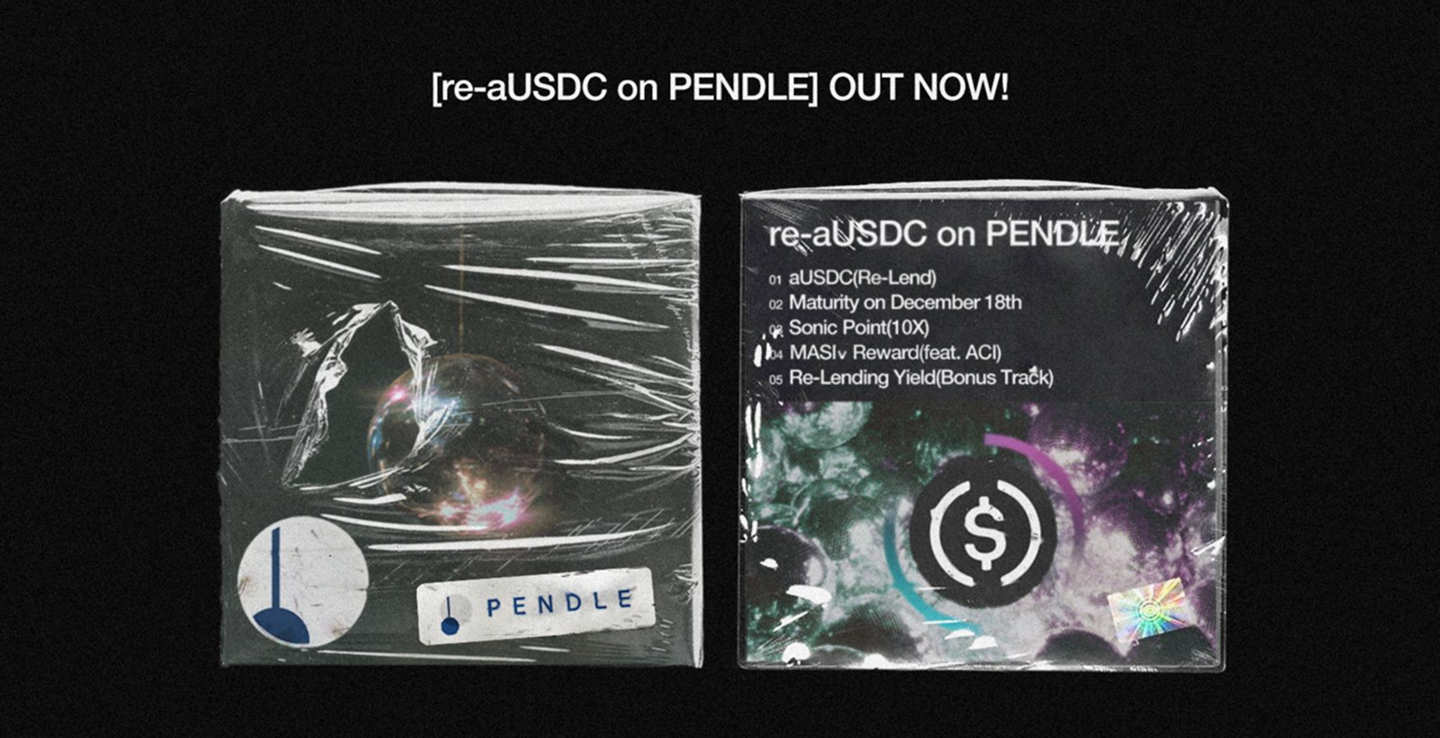
Our first real organic wave arrived via a Pendle integration. That one partnership did more for us than most of our other efforts combined.
Pendle’s users already thought in terms of which yield do they ape into next, and our integration slotted into that mental model. PT farmers weren’t worrying about whether we were built on Aave; they were simply choosing from listed yield options.
Why Pendle worked:
- Their platform = yield in users' minds
- PT yield farmers just ape into things on Pendle, lower perceived risk
- Different user type: not Aave lenders, not protocol-conscious, just yield-seeking
- Diversified our supply sources beyond trying to convert Aave users
Instead of doubling down on that channel until we exhausted it, we spread ourselves thin across multiple integrations. The lesson we ignored was to find the distribution that works, saturate it, THEN diversify.
Niche Positioning
It sounded smart to “live in the gaps” and carve out niches where Aave, Morpho, or Euler weren’t competing directly. In practice, it just shrank the set of people we could serve.
We told ourselves that aggregation meant offering what none of them could provide individually, and that this would be our moat.
What we missed is that aggregation is only valuable if the bundle makes the main thing better, not if it sidesteps the main thing entirely.
Most users don’t want clever side modes; they want the core job done better. By trying to sit between everyone without really competing with anyone, we ended up in a blurry middle.
Building on top of other protocols
Our headline yields were downstream of a long list of moving parts:
- How Aave lenders/borrowers react (not in our control)
- Aave's interest rate model + market conditions
- Which assets listed on Morpho Vaults
- Real yield of collateral assets within vaults
- Borrow demand on Morpho (unpredictable)
- Vault curator allocation strategies and timing
- Changes in any vault strategy
Small changes upstream could ripple through in ways we couldn’t control or easily explain. From a user’s point of view, yet another wrapper around existing wrappers only makes sense if it comes with serious distribution or a very obvious edge. We brought neither.
Unnecessarily Risk Averse
We built multiple layers of junior buffers to protect re-lenders. Sophisticated, safe, conservative.
It also made yields too low to attract users.
The perceived risk of a new protocol is high regardless of actual safety mechanisms. Users expect higher risk-adjusted returns to justify trying something new.
Offering "absolutely safe + low return" only works for highly trusted, established protocols like Aave itself. As a new entrant, we needed to provide sufficiently attractive returns to compete.
We optimized for safety users didn't value (because they didn't trust us anyway) at the cost of returns they cared about.
It Wasn't an Education Bottleneck
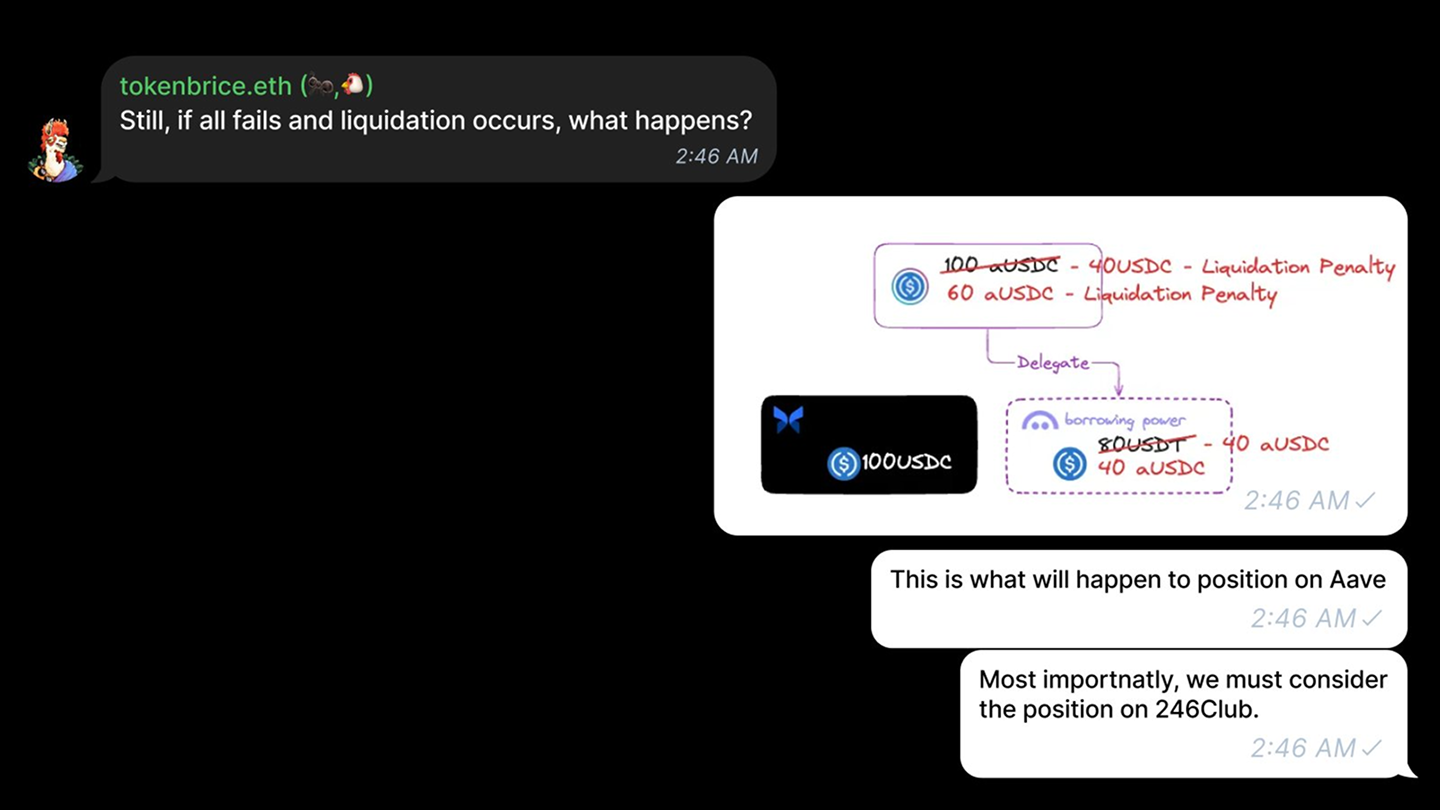
When adoption lagged, we reached for an easy story: maybe people just didn’t understand what we’d built.
That pushed us into writing better docs, more explainers, clearer diagrams. The audience we were targeting, though, didn’t need hand‑holding; they needed compelling reasons to care.
You can see this in places like Pendle:
- Many don't actually know how Pendle's PT/YT splitting works
- They don't care
- They chase best points and rewards
- Understanding comes AFTER a product delivers consistent value, not before
We tried to solve a value problem with education.
Lacking Clear Conversion from Acquisition → Retention
Plasma’s launch finally gave us the spike we’d been chasing: close to $4M in TVL, including collateral, and for the first time we broke past the $1.5M ceiling that had quietly capped us for months.
It felt like traction, but almost all of it came from incentives rather than from people choosing the product on its own merits.
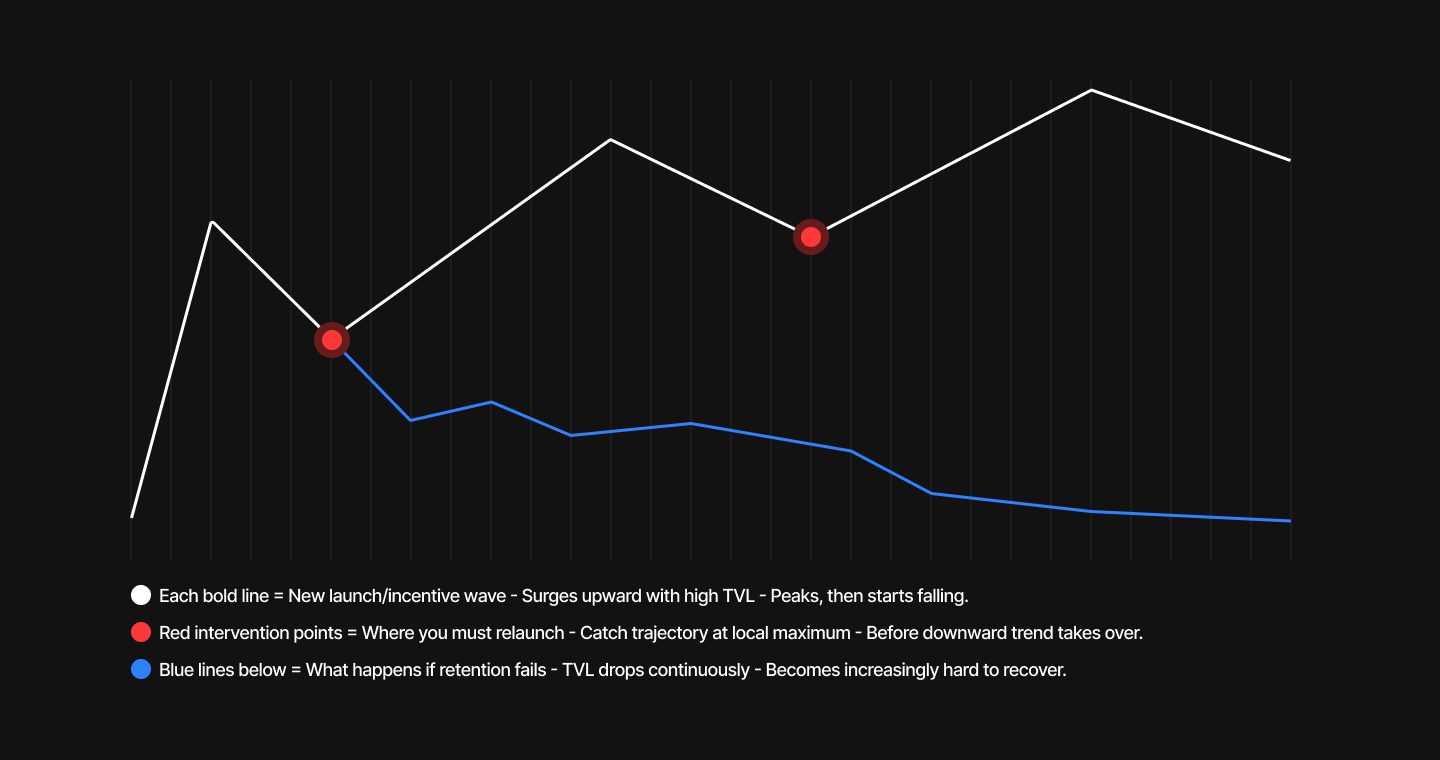
Incentivized growth comes with a built‑in clock. Rewards make it easy to acquire users early on, but the countdown to churn starts the moment you turn them on.
Unless there’s a clear plan to turn that initial wave into a compounding engine, with something that makes TVL not just hold but accelerate as rewards taper, the curve is almost always the same: a sharp rise, a short plateau, then a slow slide down as yield farmers rotate to the next farm.
We got the first part of the curve and never built the rest. Growth was a function of subsidies, not of durable value, and once those subsidies shrank, our numbers did too.
Visualizing the trap:
What's Next: IRIS
We’re taking everything we learned from market timing mistakes, execution failures, and the brutal truths about user behavior and applying it to build IRIS.
Round 2, more grounded, less romantic about our own ideas, and much more willing to walk away from a clever design if the market doesn’t care.
We're excited, humbled and ready.
Thanks for reading.