 Lens


The first piece(1) made a simple claim: DeFi is not structurally starved of capital. It is starved of durable, economically meaningful demand. The industry has spent years treating liquidity and TVL as the primary constraint, but in practice, the harder problem has been finding demand that can absorb that capital without immediately compressing its own economics.

This piece starts one step later. If demand is the scarce resource, then the strategic question is not whether demand matters, but how it should be captured. The default answer is usually supply. If a protocol wants to capture large borrower demand, it needs large lending supply. If it wants to intermediate meaningful size, it needs a balance sheet large enough to support that size. Under this view, the sequence is straightforward: assemble the capital base first, then wait for demand to arrive.
We start from the opposite direction. Instead of treating supply ownership as the prerequisite for capturing demand, we ask whether demand can be captured first by coordinating the supply that already exists.
Supply Constraint
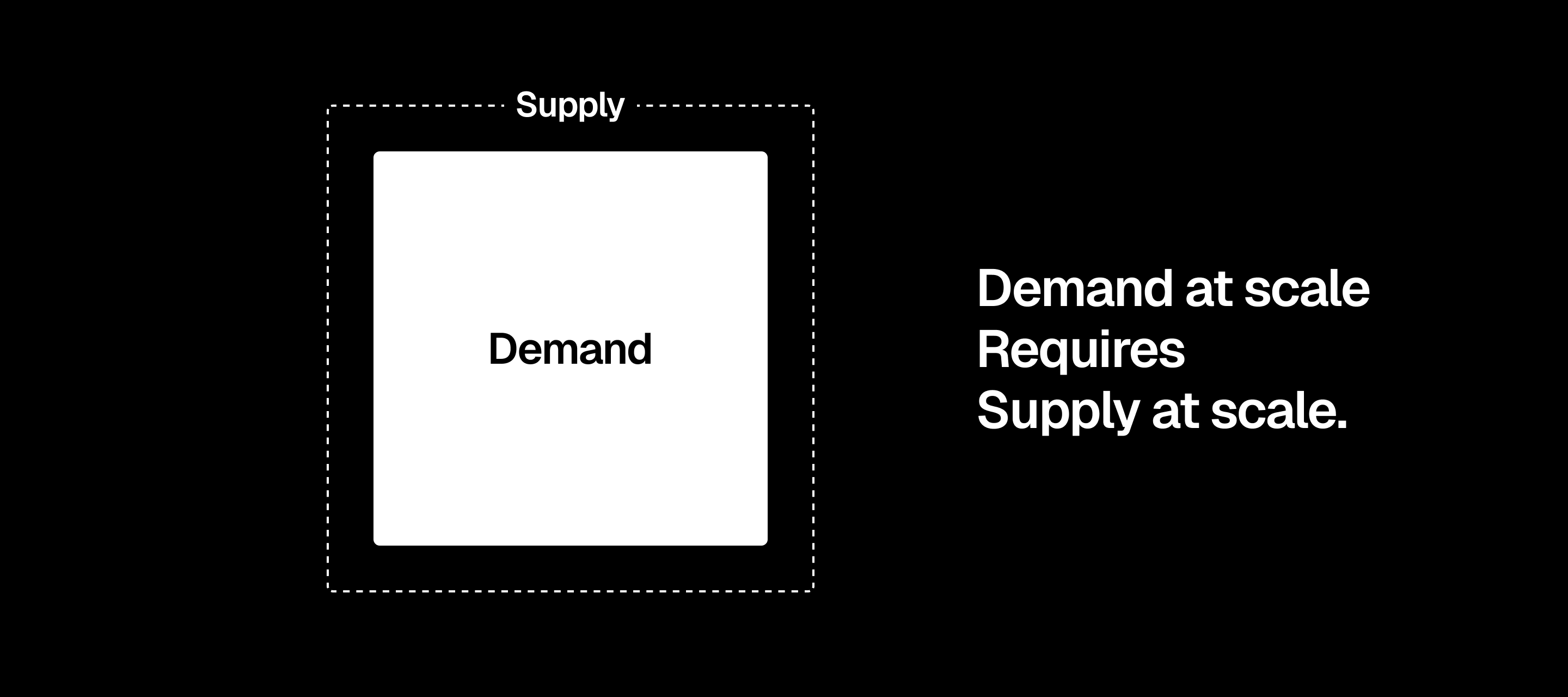
There is still a real supply constraint. Large borrower demand cannot be served without capital. Someone still needs to provide principal, someone still needs to bear risk, and someone still needs to make sure the product continues to work when market conditions change. The argument is not that supply disappears or that clever mechanism design can replace the balance sheet entirely.
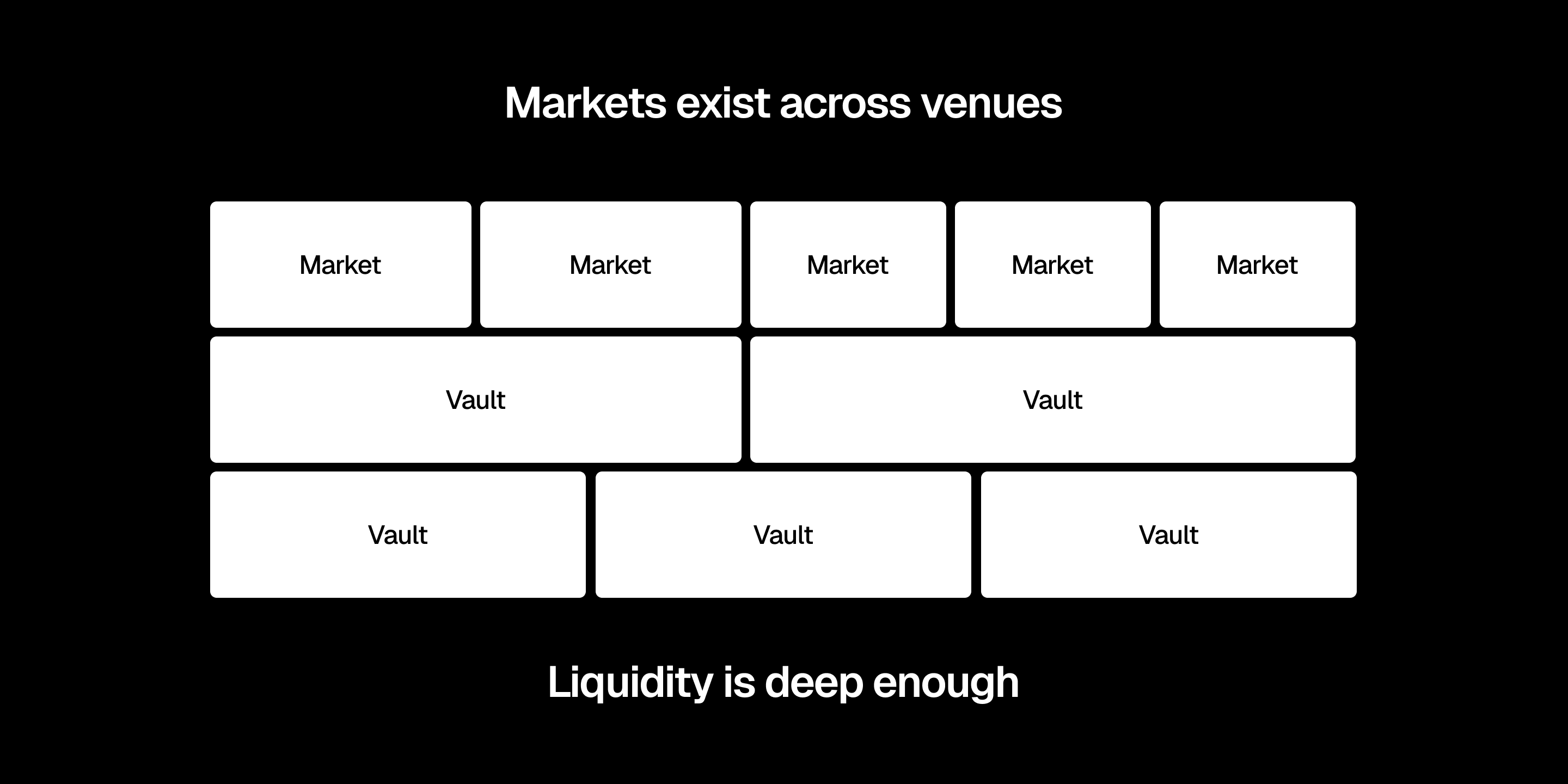
Base liquidity already sits across lending venues, pools, vaults, allocators, curators, and balance sheets. Some of it is passive, some of it is actively managed, and some of it can move quickly when the opportunity is clear enough. The issue is that this supply is fragmented across venues and localized market structures.
From the user’s perspective, that fragmentation can appear as a missing product while what’s missing could be coordination. The market has capital, but it lacks the layer that can turn scattered supply into a coherent borrower-facing outcome.
If the market already contains fragmented supply, then the winning move may not be to build the deepest isolated pool. It may be to become the place where demand clears against that fragmented supply.
Own Demand First
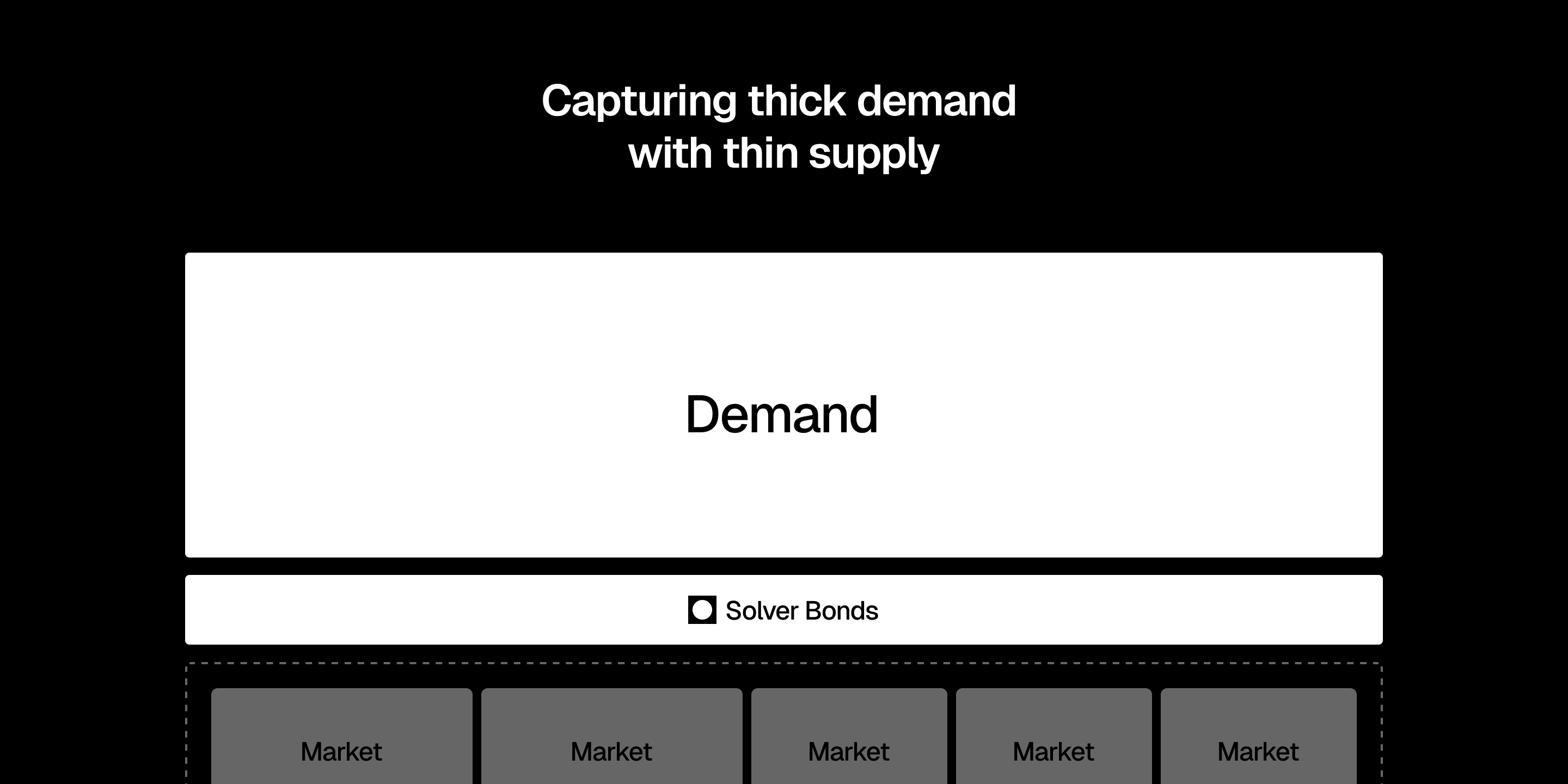
Our strategy is to capture thick demand with the thinnest possible layer of proprietary capital. It means that when the underlying liquidity already exists elsewhere, the scarce layer may be the risk-bearing and coordination layer required to transform that existing liquidity into the product the user actually wants.
And what IRIS provides is a guarantee, an active liability management function, a risk transfer mechanism, or the piece that absorbs the mismatch between what the borrower wants and what the underlying markets natively provide. In those cases, a thinner layer of capital can coordinate a much larger amount of demand because it is not recreating the full balance sheet from scratch. Instead, making existing supply usable in a different form.
Within IRIS, relatively small solver bond can facilitate a much larger amount of loan notional by wrapping already-existing capital with the thinner but critical layer needed to transform fragmented variable-rate liquidity into a unified fixed-rate loan experience.
Supply Follows Demand
This is why “not owning the supply side” can be an advantage rather than a weakness at the beginning. If a protocol starts by trying to control the entire supply stack, it often spends most of its energy solving the wrong bottleneck. It has to convince capital to sit still before proving that enough borrowers want to use it. It has to defend local liquidity before understanding which demand flows are actually worth serving. It has to compete on balance-sheet depth in a market where capital is becoming more portable and less defensible over time.
With the opposite sequence, once demand is concentrated, supply has a reason to move. At that point, supply becomes less something the protocol must fully pre-bootstrap itself and more something the market brings toward the protocol.
The Broader Opportunity
The long-term opportunity is less about building another venue with isolated liquidity but building systems that can aggregate meaningful borrower intent, clear it against fragmented supply, and do so without requiring a one-to-one replication of the full underlying balance sheet.
As onchain supply becomes more portable, allocative, and competitive, the durable advantage moves toward the layer that can make high-quality demand visible and usable at scale. The protocol that owns that demand surface does not need to own every piece of the supply stack from day one. It needs to make the supply stack compete to serve the demand it has concentrated.
Demand is still all you need. But the real divide for us is whether we can capture demand at scale before everyone else realizes that supply is increasingly downstream of it.
Thanks for reading.